
The Rise of the Traditional Office: Order, Hierarchy, and Efficiency
The modern office as we recognize it began taking shape in the early twentieth century, when industrial principles were applied not only to factories but also to administrative work. Desks were arranged in rows, supervisors sat in elevated positions, and the flow of paperwork was designed to mirror the efficiency of assembly lines. This early version of office space emphasized control, predictability, and clear hierarchies. The architecture itself reinforced corporate culture: doors were reserved for managers, walls symbolized authority, and space became a visual representation of rank.
By the 1960s, the invention of the cubicle was hailed as a humane alternative to the open rows of desks. Cubicles promised privacy, reduced noise, and personal territory. They were modular, cost-effective, and highly scalable. For growing companies, the cubicle farm represented stability. It allowed firms to expand quickly without disrupting organizational structure. Yet while cubicles supported focus and order, they also planted the seeds for isolation. Communication often had to pass through layers of management rather than flowing freely across teams.
The Open-Plan Revolution and the Pursuit of Collaboration
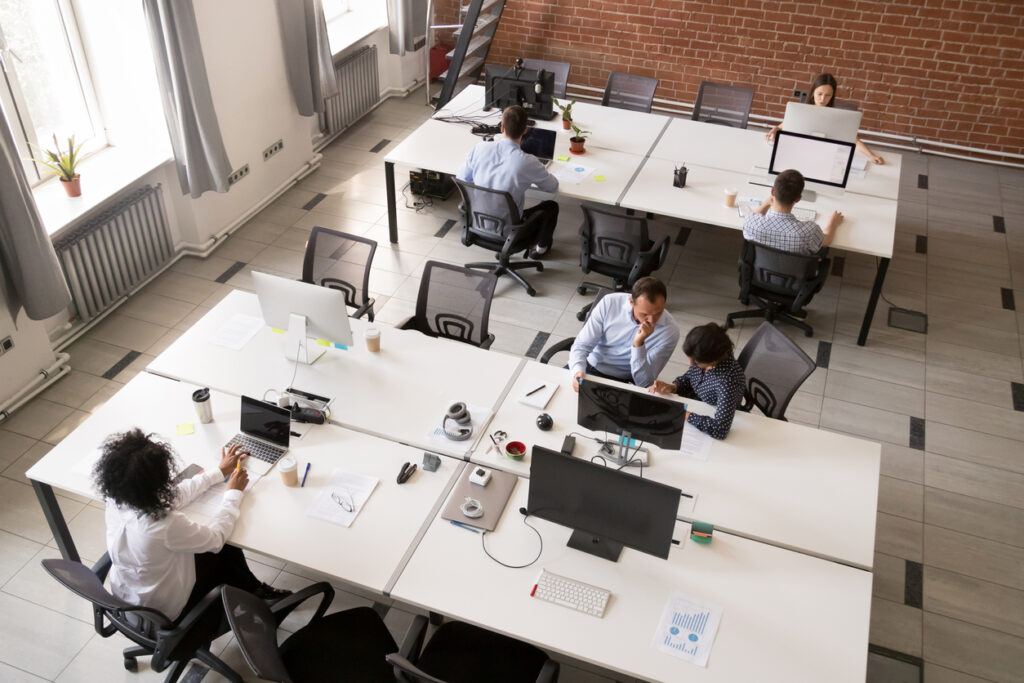
As work increasingly shifted from manual processing to creative and strategic tasks, the limitations of enclosed workstations became more obvious. In the late twentieth century, companies began tearing down walls and embracing open-plan offices. The philosophy behind this change was simple: remove physical barriers, and people will naturally share ideas. Tech startups in particular championed this model, aligning office design with their values of transparency, speed, and innovation.
Open-plan offices transformed how employees interacted. Casual conversations could happen without scheduled meetings. Departments that once functioned as isolated units became more interconnected. This shift had a direct impact on business growth. Faster idea exchange meant quicker problem-solving and accelerated product development. The visibility of leadership within shared spaces helped flatten hierarchies and encouraged a sense of shared ownership.
However, this new approach introduced its own challenges. Noise, constant interruptions, and the lack of privacy began to affect concentration and well-being. While openness encouraged collaboration, it also exposed the need for balance. Businesses soon realized that growth depended not only on communication but also on the quality of focus and individual productivity.
The Birth of the Hybrid Workspace
The evolution of office space did not stop with the open plan. Instead, it moved toward a more nuanced understanding of how people actually work. The hybrid workspace emerged as a response to the extremes of both cubicles and open layouts. This model combines quiet zones for focused tasks with dedicated collaboration areas designed for teamwork, brainstorming, and social interaction.
In these environments, architecture becomes a strategic tool rather than a passive container. Glass-walled meeting rooms allow transparency while maintaining acoustic privacy. Soft seating areas and informal lounges encourage spontaneous discussions. Adjustable desks, movable partitions, and modular furniture enable teams to adapt their environment based on project needs.
For businesses, this flexibility is more than a matter of comfort. It directly affects growth by allowing teams to scale and reorganize without costly renovations. When a company can reconfigure its space as its priorities change, it becomes more resilient. The hybrid workspace supports both deep individual work and collective creativity, which are essential ingredients for sustained innovation.
Technology as the Invisible Architect of Modern Offices
The transformation from cubicles to collaboration zones would not be possible without technology. Early offices revolved around paper, filing cabinets, and stationary infrastructure. Today’s offices are built around digital ecosystems. Wireless internet, cloud computing, and collaborative software have made physical location less rigid while simultaneously increasing the importance of how space supports digital interaction.
Smart offices integrate technology directly into their design. Sensors adjust lighting and temperature based on occupancy. Video conferencing rooms are optimized for hybrid meetings, allowing remote and in-office employees to collaborate seamlessly. Charging stations, interactive screens, and digital whiteboards turn walls and tables into dynamic tools rather than static surfaces.
This technological layer plays a crucial role in business growth. Seamless connectivity reduces friction in communication and decision-making. Data-driven environments allow companies to analyze how their spaces are used and make informed adjustments. As a result, the office becomes a living system that evolves alongside the organization, rather than a fixed structure that eventually becomes obsolete.
Collaboration Zones as Cultural Engines
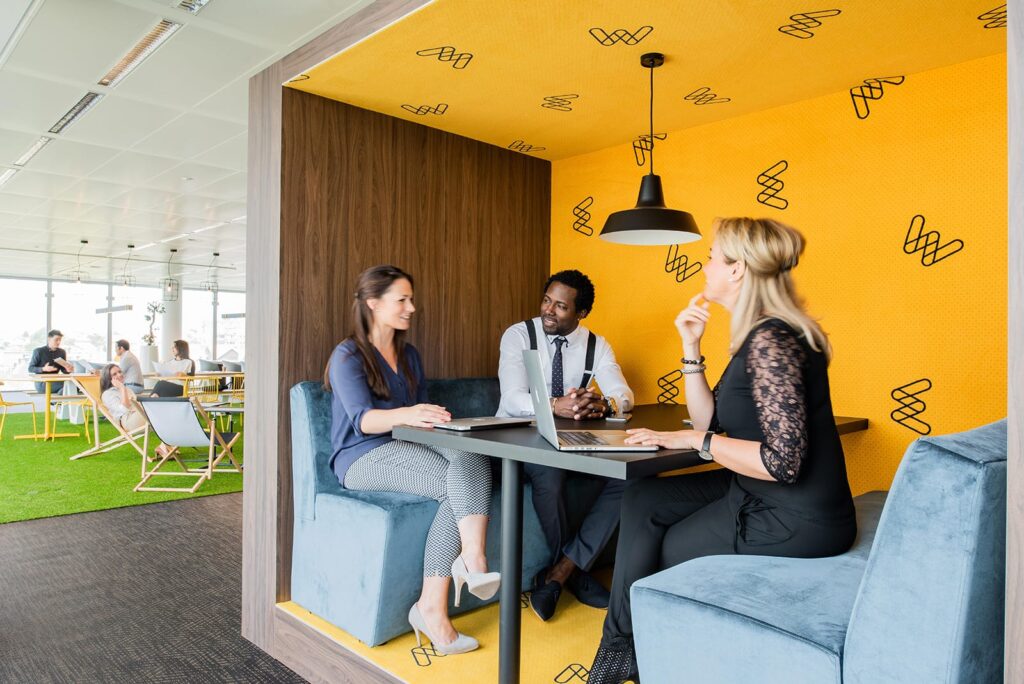
Collaboration zones represent more than a design trend; they symbolize a shift in organizational mindset. These spaces are intentionally built to bring people together, whether through long communal tables, idea walls, or comfortable breakout areas. The goal is to create environments where dialogue feels natural and creativity is encouraged.
This cultural shift has profound implications for business expansion. Companies that facilitate collaboration tend to develop stronger internal networks. Knowledge flows more freely across departments, reducing duplication of effort and accelerating strategic alignment. Employees who feel heard and involved are more likely to invest emotionally in their work, leading to higher retention rates and stronger company loyalty.
Moreover, collaboration zones help bridge generational and disciplinary gaps. When designers, engineers, marketers, and managers share the same creative spaces, ideas gain depth and perspective. This cross-pollination of expertise often leads to distinctive products and services that drive competitive advantage.
Remote Work and the Redefinition of the Office’s Purpose
The rise of remote work, accelerated by global events and advances in communication technology, has forced businesses to rethink the role of the physical office. No longer is it simply a place where tasks are completed. Instead, it is becoming a hub for connection, culture, and collective energy.
As employees gained the ability to work from home or satellite locations, companies began redesigning offices to emphasize experiences that cannot be replicated remotely. Collaboration zones, social spaces, and creative studios have become central features. The focus has shifted from housing workers to inspiring them.
This redefinition has a direct impact on growth strategies. Companies are now able to recruit talent from wider geographic areas while maintaining strong team cohesion through thoughtfully designed physical spaces. The office becomes less about attendance and more about purpose-driven gatherings that strengthen relationships and align teams around shared goals.
The Psychological Impact of Space on Performance
Office design is not merely an operational consideration; it is deeply psychological. Light, color, acoustics, and spatial layout shape how people feel and behave. Cubicles, with their high partitions and limited visibility, often created a sense of confinement. Modern collaboration zones, in contrast, aim to foster openness, trust, and mental stimulation.
Natural light, indoor plants, and biophilic design elements have become more common in contemporary offices. These features reduce stress and improve cognitive function, which directly translates into better performance. When employees feel comfortable and valued in their environment, they are more likely to take initiative and contribute ideas.
Global Trends and the Shift Toward Flexible Real Estate
Another major consequence of evolving office design is the changing approach to commercial real estate. Long-term leases and fixed layouts are increasingly being replaced by flexible arrangements and co-working models. This shift allows businesses to scale up or down without the financial risk of underutilized space.
Co-working environments, in particular, embody the concept of collaboration zones on a larger scale. They bring together professionals from different industries under one roof, creating ecosystems of opportunity. For startups and small businesses, these spaces provide access to infrastructure and networking that would otherwise be out of reach.
The Future of Workspaces and Sustainable Growth
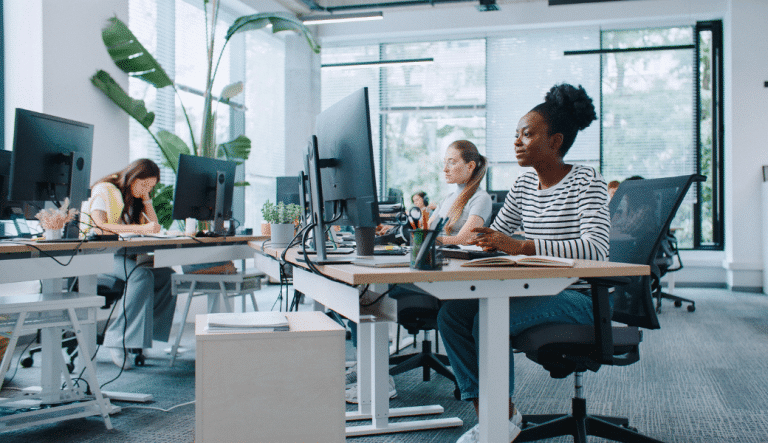
Looking ahead, the evolution of office spaces shows no signs of slowing. The future points toward environments that are even more adaptive, intelligent, and human-centered. Artificial intelligence may soon optimize seating arrangements and meeting room usage. Virtual and augmented reality could blend physical and digital collaboration. Sustainability will play a central role, with green materials and energy-efficient systems becoming standard rather than exceptional.
These developments are not simply about aesthetics or trends; they are deeply connected to how businesses grow. Companies that align their physical environments with their strategic goals are better positioned to innovate, attract talent, and respond to market changes. The office becomes not just a place to work, but a platform for growth itself.
Conclusion: Space as Strategy
The journey from cubicles to collaboration zones reflects a broader transformation in how organizations understand work. Where once control and efficiency dominated, now flexibility, creativity, and connection take center stage. Office spaces have evolved from static containers into dynamic ecosystems that actively shape behavior, culture, and performance.
This evolution has had a measurable impact on business growth. By fostering collaboration, supporting well-being, and enabling adaptability, modern workspaces help companies move faster and think bigger. The most successful organizations are no longer those with the largest buildings, but those with spaces designed to unlock human potential. In this sense, the evolution of office space is not just an architectural story, but a strategic one, redefining how businesses grow in a changing world.